
Approaching a 1,000 pound animal can be a daunting task, even for experienced equestrians. As a prey animal throughout history, horses are genetically designed to be curious but mostly skeptical, and flee at a moment’s notice. Despite their large size, they do scare easily, and we can’t always predict what might startle them.
Learning to be aware around a horse and know how to approach them is one of the first lessons new equestrians get taught. Beginning the interaction with a horse in a calm, respectful manner helps keep the entire lesson a fun and energetic experience for both the horse and the rider. While for some it may be second nature to approach a horse in such a way, it isn’t always obvious to those with less experience. Here are a few tips to keep in mind when approaching a horse for the first time that will help forge the friendship with them for many years to come.
A Calm Mindset
Horses are naturally very anxious creatures thanks to their long history of being on high alert for predators. While you may not think of yourself as a frightening being to such a large animal, horses can actually be pretty weary of people, especially new ones. They might have been mistreated by a human in the past or are simply just nervous to meet their new friend.
On the other hand, it’s also perfectly normal for you to be nervous meeting and potentially riding such a large animal if you’re new to the horse world. Even if you have been around horses before, there are so many different breeds, sizes, and energy levels that each new horse you meet is a completely different experience. It’s also just good to keep in mind that even if you clicked well with and understood one horse, it doesn’t mean they’ll all behave the same way, so it’s a good thing to be cautious around any new animals.
As difficult as it may be sometimes, the best thing that you can do when meeting a new horse for the first time is to be calm. Horses are incredibly intuitive animals, so if you’re anxious, they can feel it, even if you think you’re hiding it well.
If you’re having a hard time getting into a calm mindset, try taking some deep breaths and gathering everything you might need before approaching the horse. If you’re meeting a new horse for horseback riding lessons, don’t hesitate to voice your anxieties to your instructor, they’re there to help guide you through the interaction. Even if you have been around horses for a while but are still feeling nervous, confiding in a knowledgeable friend can help calm your mind before proceeding.
Slow and Steady Movement
Once you have your mind in the right place and are ready to approach the horse, it’s important to pay attention to your movements. Meeting and greeting horses can be very exciting, but it’s important to remember that horses can get scared easily and may become alarmed from overly-excited gestures.
Remember to walk slowly when approaching a horse so as to not startle them, make sure they can see you as you get closer. Horses have a blind spot directly behind their tails, so make sure you approach them from the side or the front where they can see you clearly.
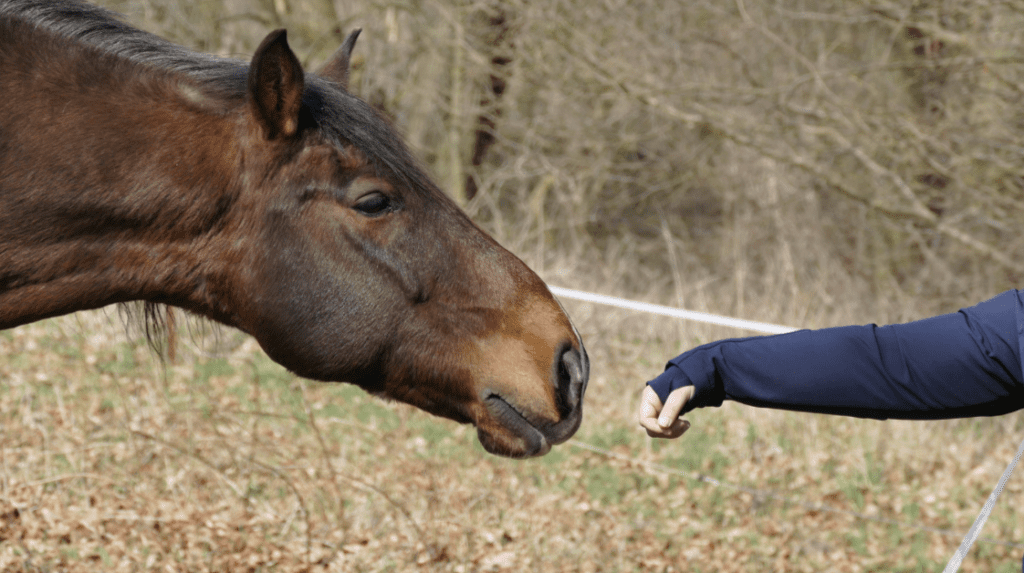
When you go to pet the horse, make sure you give them a chance to see, smell, and observe you first. Pay attention to their behavior: for example, a horse that’s flaring their nostrils and appears a bit wide-eyed is probably not ready for physical touch and needs a few more minutes before proceeding.
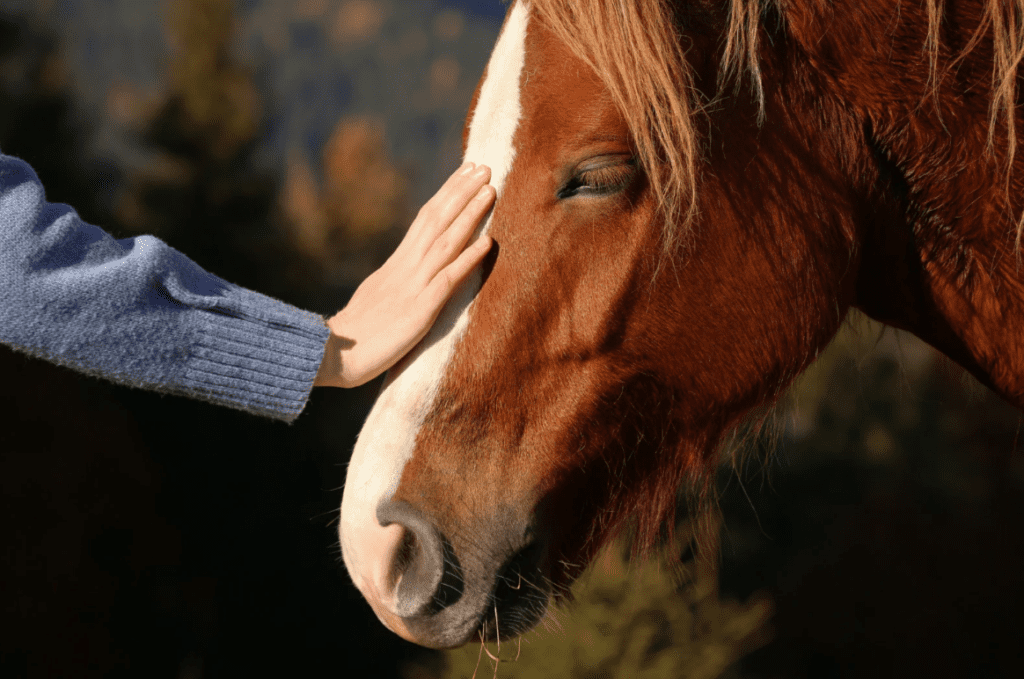
Every horse is also different in their preferences of where they like to be pet, so it’s always best to check with the owner or your instructor before reaching out. In general, the most preferred places for a horse to be pet are on the neck, the withers, and the shoulder. Just remember to keep your movements slow and steady, if you notice the horse acting uncomfortable with the interaction, simply step back and try again when they seem more calm.
Confidence
The most important aspect of approaching, interacting with, and riding a horse is your confidence. As we have discussed, horses are incredibly anxious and vigilant animals, but they are also very curious and eager to please. They want to have a partner that they can trust and feel safe with, so it’s important to be confident from the beginning, even if it feels difficult at first.
Horses can be very trusting of their people once the relationship is established, but gaining their trust takes time and experience. If their interactions with you are usually filled with anxiety and hesitancy, they are going to pick up on your feelings and feel them with you. They may not understand why you’re not feeling confident, they will just know that you aren’t and feel the need to be on high alert because of it.
If feeling confident in yourself as an equestrian is too difficult right now, find something that you can feel confident about and lean into that. Are you confident that you can listen to your instructor and follow their instructions? Can you be confident that you will try your best? After all, that’s all we can do, but your horse will pick up on it and be reassured they’ve got a great new friend to learn with.
Frequently Asked Questions
1. What is the safest way to approach a horse?
Approach a horse calmly from the front or slightly to the side where they can see you clearly. Walk slowly, avoid sudden movements, and speak softly to let them know you’re there.
2. Why shouldn’t you approach a horse from behind?
Horses have a blind spot directly behind their tail. Approaching from behind can startle them and may cause them to kick out of fear.
3. Why is staying calm important around horses?
Horses are highly intuitive and can sense tension through body language, breathing, and subtle cues. Your calmness helps reassure them.
4. Can horses sense fear?
Yes. Horses can detect changes in posture, muscle tension, breathing patterns, and even scent that may indicate fear or stress.
5. Why is approaching a horse correctly so important?
A respectful first interaction sets the tone for safety, trust, and a positive long-term relationship.