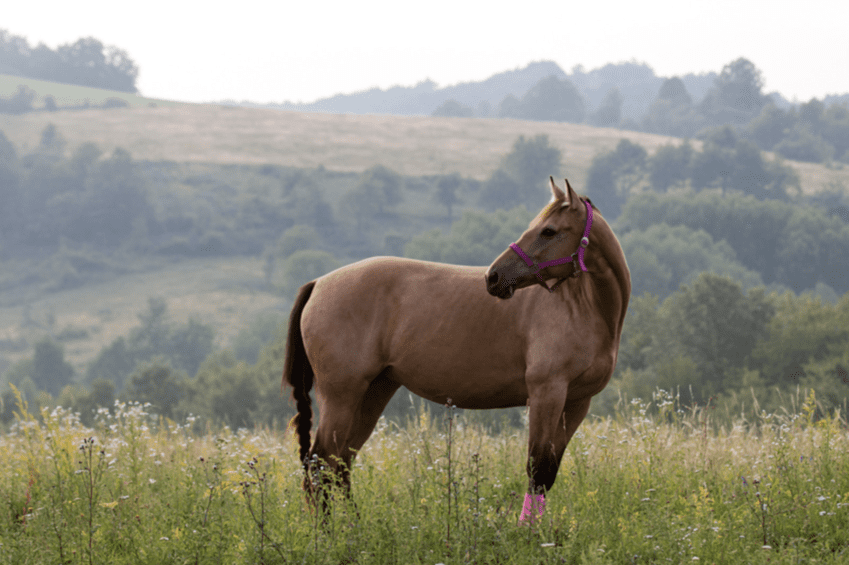
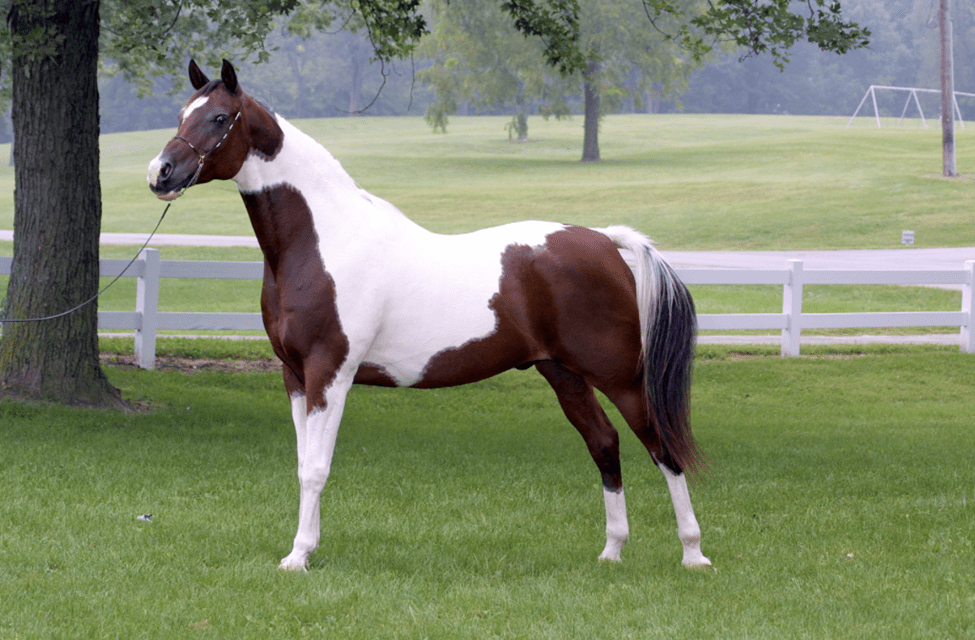
Have you ever wondered what your horse can actually see? You may have noticed their different pupil shape from your own, or their stunning colors from shades of dark brown to bright blue. Their eyes are one of the biggest of any land mammal, but they actually don’t see things in a way that’s similar to humans at all. Their interpretation of the world through their own lenses, and the uses for this design in their biology, is one of the most fascinating yet underappreciated aspects of them. Learning how horses see the world might just help you understand them that much better.
The Importance of Shape
Horses have a distinctly different shape to their pupils than humans do. They have an elongated, rectangle shape that sits horizontally, allowing them to see more of what’s in front of them and behind them than you could imagine. This particular shape allows horses to have a nearly 360-degree view around them, and is most commonly found in prey animals like horses that benefit from this trait. By being able to see all around them, they’re able to detect even the slightest movement from nearly any direction, allowing for early detection of potential predators in the area.

The shape of their pupils also aids them in other ways. They don’t even need to move their head to see their full field of vision, so they can remain vigilant while standing completely still. The shape also reduces the amount of sunlight glare thanks to the rectangular shape and instead lets in more light from the sides, allowing them to see further along the horizon without the sunlight really bothering them.
What Can a Horse Actually See?
While their fields of vision are fascinating and perfectly orchestrated for them, their actual input is quite different from the human eye.
For example, their night vision is absolutely incredible thanks to their ability to manipulate lighting input and use it to their advantage in low-light environments. This is a critical trait for prey animals like horses and many others with the same eye shape.

On the other hand, humans can actually see much more clearly than a horse when it comes to the finer details. While horses have a much greater field of vision, about 350-degrees as opposed to our 180-degrees, the amount of clarity is compromised and they have a harder time identifying individual objects. This can help explain why a horse might spook if something changes in their environment, like a new vehicle or a tree that has been cut down. That bush that they’ve passed by a thousand times suddenly becomes very suspicious on a windy day, not because they’ve decided to be scared of it, but because they can’t properly identify it right away.
Horses also can’t see colors like humans can. Horses have what is known as dichromatic vision, meaning they can only see two primary colors, yellow and blue. Humans have what’s known as trichromatic vision, giving us a much larger range of colors including purples, reds, and greens. Despite the fact that horses mostly eat grass, they can’t actually see its vibrant green colors; it appears more as shades of gray or brown to them.
Eyesight and Horse Behavior
Given that a horse’s vision is so different from ours, it can be difficult sometimes to understand why they do the things that they do. They have incredible vision when it comes to dark environments or detecting movement, but they also struggle to identify objects with immense clarity like we can. This can mean that what was a barrel that stood up right but has now fallen over today, is now a very scary monster to a horse who has seen said barrel every day for the last several months. Due to the nature of a horse’s eyesight and their history as a prey animal, they can have a harder time adjusting to their environment than we do.
Horses also have blind spots that we have to be constantly aware of as their human counterparts. While they do have nearly a full field of vision, it’s not quite 360-degrees. Horses have a blind spot just below their nose and directly behind their tails. Their eyes are also mostly monocular, meaning that each eye sees and interprets things independently with the exception of right in front of them where their sight becomes binocular, or their eyes work together to interpret the picture. This is worth keeping in mind if you notice your horse spooking more when you’re on one side than the other, they may not be able to see you as well and it’s worth getting that eye checked out.
All in all, the core of bonding with horses is understanding and communicating with one another as best we can without speaking the same language. Knowing how your horse sees the world, and how different it is from yours, might help you better understand why they do the things they do.

Frequently Asked Questions
1. How do horses see differently than humans?
Horses have a nearly 350-degree field of vision, compared to a human’s 180 degrees. However, their clarity and detail recognition are weaker than ours while their night vision is stronger.
2. How much can a horse see around them?
Horses can see nearly 350 degrees around their body, giving them almost panoramic vision.
3. Do horses have blind spots?
Yes. Horses have blind spots directly behind their tail and directly below their nose.
4. Do horses see in color?
Horses have dichromatic vision, meaning they primarily see blues and yellows but cannot distinguish reds and greens very well.
5. Why might a horse spook more on one side?
Because each eye works independently, vision issues or weaker sight in one eye can affect behavior on that side.