
Horses are magnificently sensitive animals. They are well known for their attunement to their surroundings and within their emotional connections, if you’re lucky enough to have one with them. But there is one aspect of a horse that is often overlooked or disregarded in their importance, but are actually one of the most sensitive parts of the animal: the whiskers. The whiskers on horses serve multiple purposes, including detecting what something is, how far away it is, and even what something feels like before they even touch it. There are many fascinating factors of a horse, but their whiskers are one of the least explored. Nonetheless, here’s a few things you probably didn’t know about what they can do.
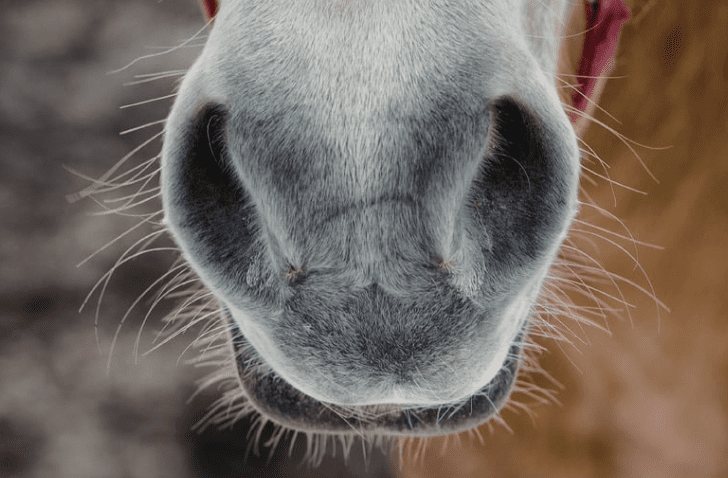
1. What Are They?
You might know that most mammals have whiskers, these specialized hairs called vibrissae that aid an animal in a variety of tasks. These special hairs are more beneficial to some animals than others, and many can even move their whiskers on their own individually for optimal navigation and foraging.
For horses, their whiskers are mostly used for foraging (looking for something to eat which is arguably their favorite activity), detecting their surroundings, or engaging with others. While horses cannot individually move their whiskers or vibrissae independently, they do receive a great deal of information from their sensory input thanks to additional nerve receptors located at the base of these specialized hairs.
2. Where Are Their Whiskers?
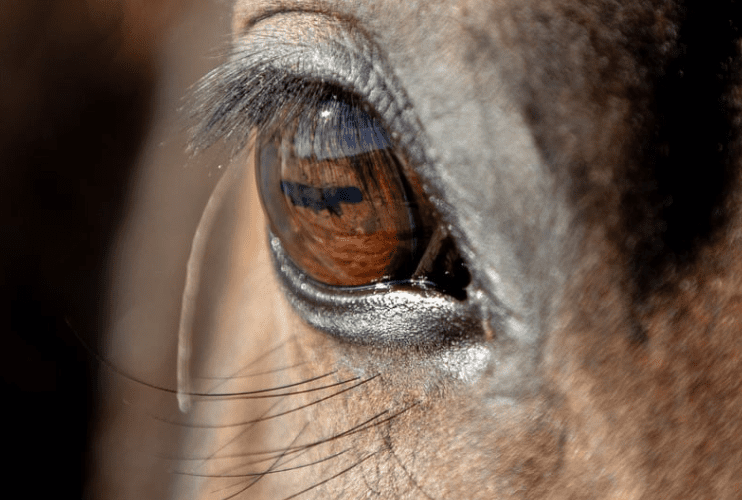
This might seem like an obvious question, but for many people, finding out they have whiskers around their eyes is pretty surprising. The placement of these whiskers is not by accident, and neither are the whiskers between their nose and upper lip or underneath their chin.
The strategy of these placements is not random, but instead provides optimal information on the horse’s surroundings, the location of specific food, the textures in their environment, dangers that could be nearby, and much more. Each individual whisker is providing information at all times and allows the horse to decipher what information is worthy of further attention.
If you’ve ever been around a horse long enough or offered one a treat, you might have noticed their scruffy whiskers around their mouth. However, you might have also noticed that they like to “play” a lot with their lips and maybe did a little detective work before taking the treat from you. This was likely for two reasons:
- Horses get more information through the sensory input from their whiskers than we will ever fully understand. In those few seconds that a horse was exploring with their lips before taking the treat from you, they received information about the texture of your hand, of the treat, the smell to detect the flavor, how fresh it was, if they have met you before, and much more.
- The second reason was likely due to the fact that horses have a blind spot beneath their nose, which is the most important reason for their whiskers in the first place.
3. How the Whiskers Work
It’s true, horses have incredible eyesight, but they also have an incredibly long face that has both advantages and disadvantages. The whiskers provide them with all sorts of vital information to their well-being, but the primary purpose is due to the fact that horses actually can’t see what they are eating or touching physically, they require their whiskers to describe it to them.
The blind spot of a horse prevents them from being able to see below their nose, so you might notice horses doing many things to understand their environment that you wouldn’t have before. For example, if you watch a horse grazing, you’ll notice their lips wiggling back and forth before they take a new bite, or they seem to “chase” their grain in their buckets before finding the next mouthful. They are able to take in a startling amount of information in such a short time thanks to their whiskers, but the main reason they have them is to be their “eyes” where the normal ones can’t reach.
4. Why Do We Trim Them?
Sometimes in the equestrian world, owners will trim their horse’s whiskers, and this has become a hot debate in recent years.
The main purpose for trimming horse whiskers is purely for aesthetic purposes, and virtually no other reason. However, given the amount of research that proves a horse’s reliance on their whiskers for sensory input, the question of how humane the practice is remains relevant. Most experts agree that it is inhumane and should only be done so if absolutely necessary, such as for medical reasons. A horse’s whiskers are an incredibly intricate part of their anatomy that we still don’t fully understand. Because of this, we don’t know for sure how much sensory information they lose when their whiskers are removed.
Given the heightened sensitivity of these whiskers and their importance to compensating for a horse’s blind spot, it’s safe to say that horses are extraordinary animals with incredible abilities that we will never fully understand but can certainly appreciate. The next time a horse chooses to nuzzle you, take it as a compliment, they’re just as curious about you as you are about them.
Frequently Asked Questions:
- What are horse whiskers and what are they used for?
Horse Whiskers are long, thick, specialized hairs called vissibrae that can be found around their eyes, upper lip, and chin. They’re used to help a horse explore and understand their surroundings.
- Do horses really need their whiskers?
They can survive without them, but we don’t fully understand the impact of removing their whiskers on how they can perceive their environments, so trimming them is advised against.
- Can horses see what’s directly in front of their nose?
They can’t actually, horses have a blind spot below their nose which makes their whiskers that much more important for foraging!
- Are horse whiskers the same as whiskers on cats or dogs?
In many ways, yes, they are very similar and used for similar reasons!
- Why do some people trim a horse’s whiskers?
This is mostly done for aesthetic reasons, but is highly debated in the horse world today.
- Do horse whiskers grow back if they are trimmed?
They do grow back just like normal hair, but it does take time.