
Horses are some of the most communicative animals in the world – if you are paying attention. They have so many ways to communicate their emotions, potential dangers, illnesses, and preferences that if you don’t know what you’re looking for, it can be hard to tell what the problem is. Humans, just like horses, have many ways to communicate how we feel, too, but we may do so in ways that you’ve never noticed before, such as subtle body language or subconscious feelings that translate to non-verbal cues. The funny thing about horses is that not only are they experts in their own body language, but they’re experts at reading us as well.
Ears
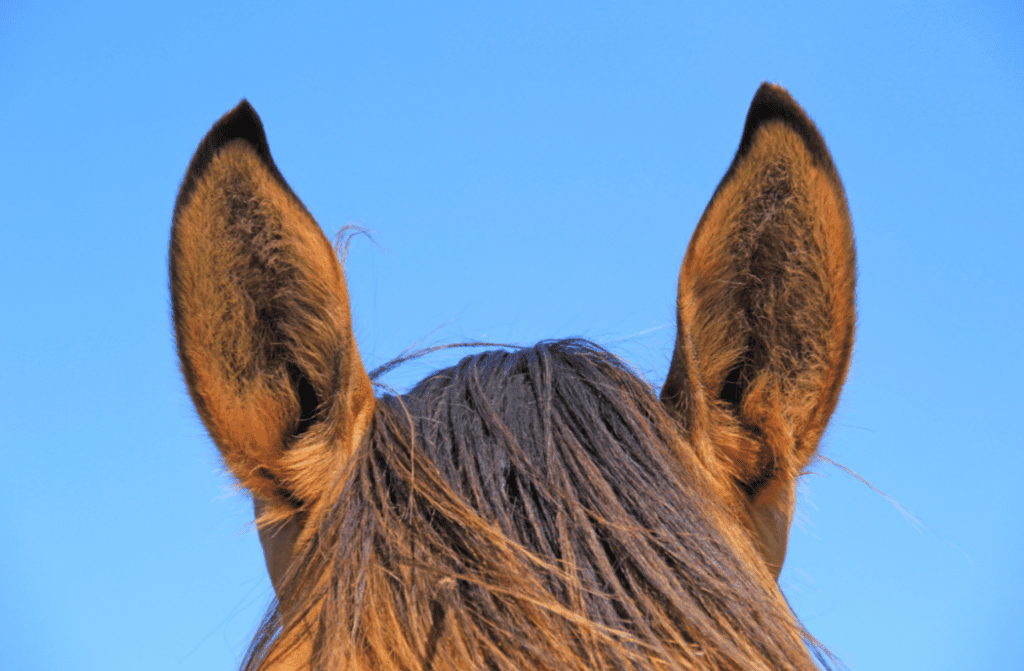
Horses are immensely expressive animals, and their ears are one of their main tools for telling you how they feel and where their attention is at that moment. One of the first lessons riders learn is that a horse with its ears pinned back is a horse that is not happy, and to be extra cautious for whatever comes next.
But not only do horses have the ability to pin their ears all the way back against their neck to express their anger, they can actually rotate each ear independently by up to 180 degrees. They possess 10 distinct muscles in each ear to aid them in detecting the direction of a sound and funnelling out which ones are important.
You may notice when you’re riding that your horse’s ears are facing to the sides when relaxed; this is a sign that they’re listening to you and the environment around them. However, if you notice their ears suddenly perk forward, they have detected something around them that you may not be able to hear. While horses don’t have the same hearing capabilities as dogs, they are slightly more sensitive to sounds than dogs. With that said, their eyes are their real superpower.
Eyes
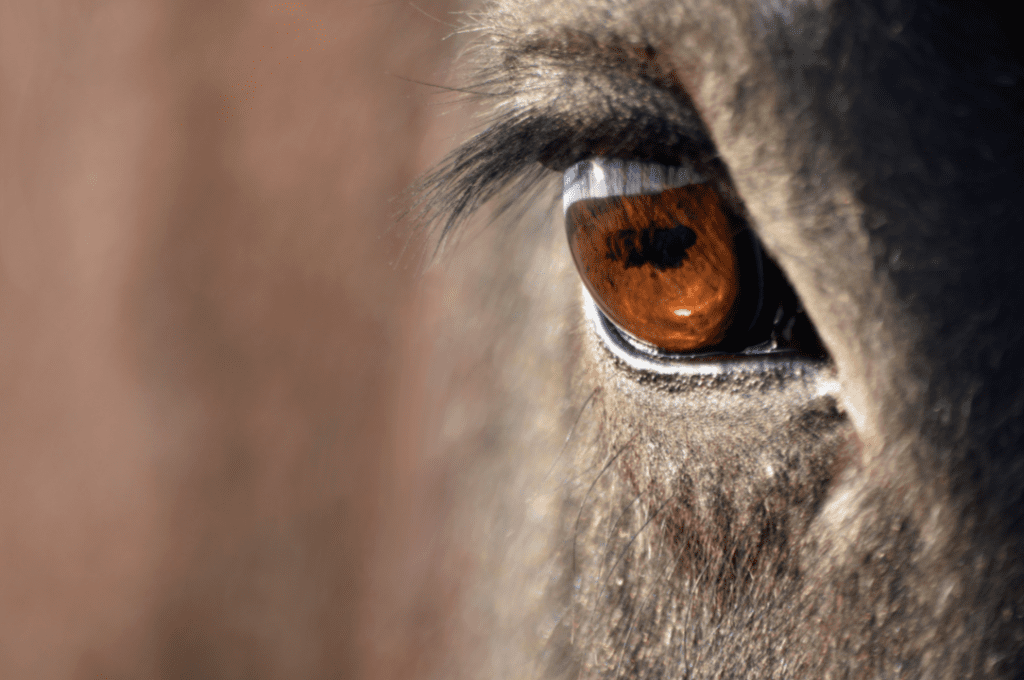
Horses have some of the largest eyes of all mammals, only beaten by ostriches, whales, and seals. They are able to see 350 degrees around them at all times, with their only blind spots being directly in front of their noses and directly behind their tails. Their stellar vision also allows them to see in dark conditions much better than people can, but still not quite as good as cats. This is due to their history as a prey animal, they are always vigilant of their surroundings and their eyes are their main input of information.
While it is a common misconception that horses are colorblind, that’s actually not entirely true. Horses have been proven to be able to perceive some colors, particularly blue and yellow, but not green and red.
What they do lack in their vision is depth perception, because they have monocular vision as opposed to our binocular vision, they have a harder time being able to tell how far away something is. Monocular vision essentially means that they see the world through each eye working independently, whereas human eyes work together and face the same direction. Horses do have a slight overlap for their eyes depending on how their head is oriented at the time, but this form of vision is what grants them the ability to see all around them as mentioned above.
Mouth
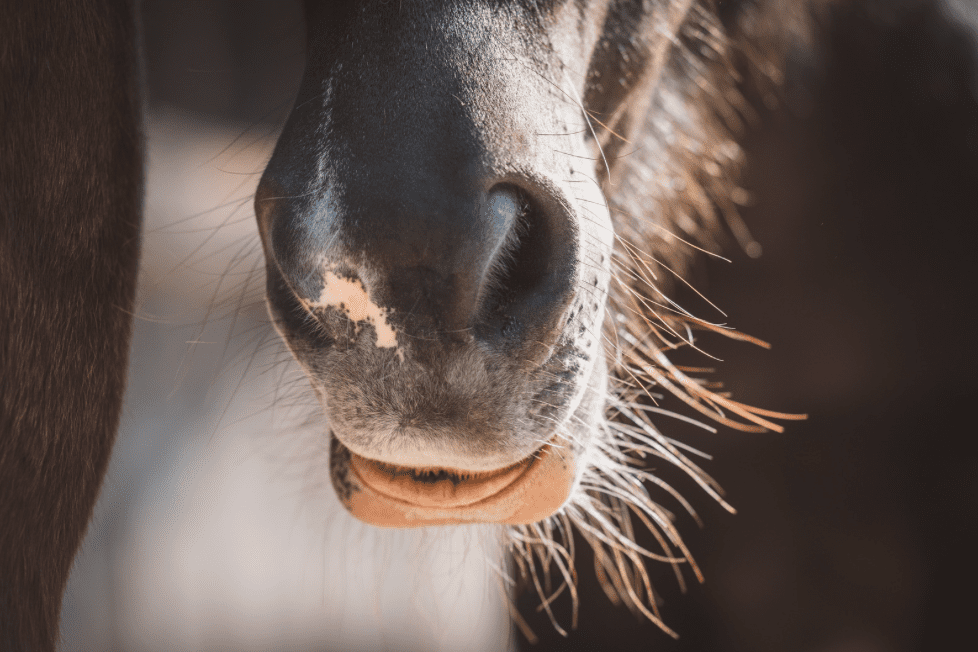
Despite being unable to see with their eyes directly below their nose due to it being one of two blind spots, horses can still “see” directly under their nose thanks to their highly developed tactile system. A tactile system is essentially an animal’s sense of touch, and where we use our fingers, horses use their lips and whiskers.
Horse whiskers are highly developed sensory hairs around their muzzle area and eyes that help them detect their surroundings. They can use these sensitive hairs on their lips to differentiate between different types of grass, determine what objects lie in their path, and groom their herd mates effectively, all without being able to actually see what they’re doing.
The sensitive hairs and nerves on their lips not only help them explore their environment while preventing injury to the nose, but they perceive the world in a way that we can’t even fully comprehend yet. We still don’t completely understand how horses experience the world around them, and there’s a possibility that we never will!
Horses are truly incredible animals, but are also immensely complex. They are built in a way that we can’t entirely perceive, nor could they understand how we experience the world. Nonetheless, we have found a way to put our strengths together and build an incredibly powerful relationship that has lasted several thousand years, appreciating and understanding each other on a much deeper level than just physical. Bonding with a horse means being connected in a way that requires mutual respect for each other’s strengths, and building trust in a partnership that can’t be fully explained, but exists nonetheless.
Frequently Asked Questions
1. How do horses communicate with humans?
Horses communicate through body language, ear movement, eye expression, posture, and subtle facial signals.
2. What does it mean when a horse pins its ears back?
Pinned ears usually indicate irritation, discomfort, or aggression and should be taken as a warning sign.
3. How good is a horse’s vision?
Horses can see about 350 degrees around them, giving them excellent awareness of their surroundings, even in low light conditions.
4. Are horses colorblind?
Yes, but they can see some colors, especially blue and yellow. They have difficulty seeing red and green.
5. What is monocular vision in horses?
Monocular vision means each eye works independently, allowing horses to see a wide field of view.